Top100 Tech Lab may earn a commission from qualifying purchases when affiliate tracking is active. This never changes what you pay or how we frame our advice. Read the full disclosure.
Move photos from a camera card into the device you edit on without a fragile pile of adapters.
A real-life starting point
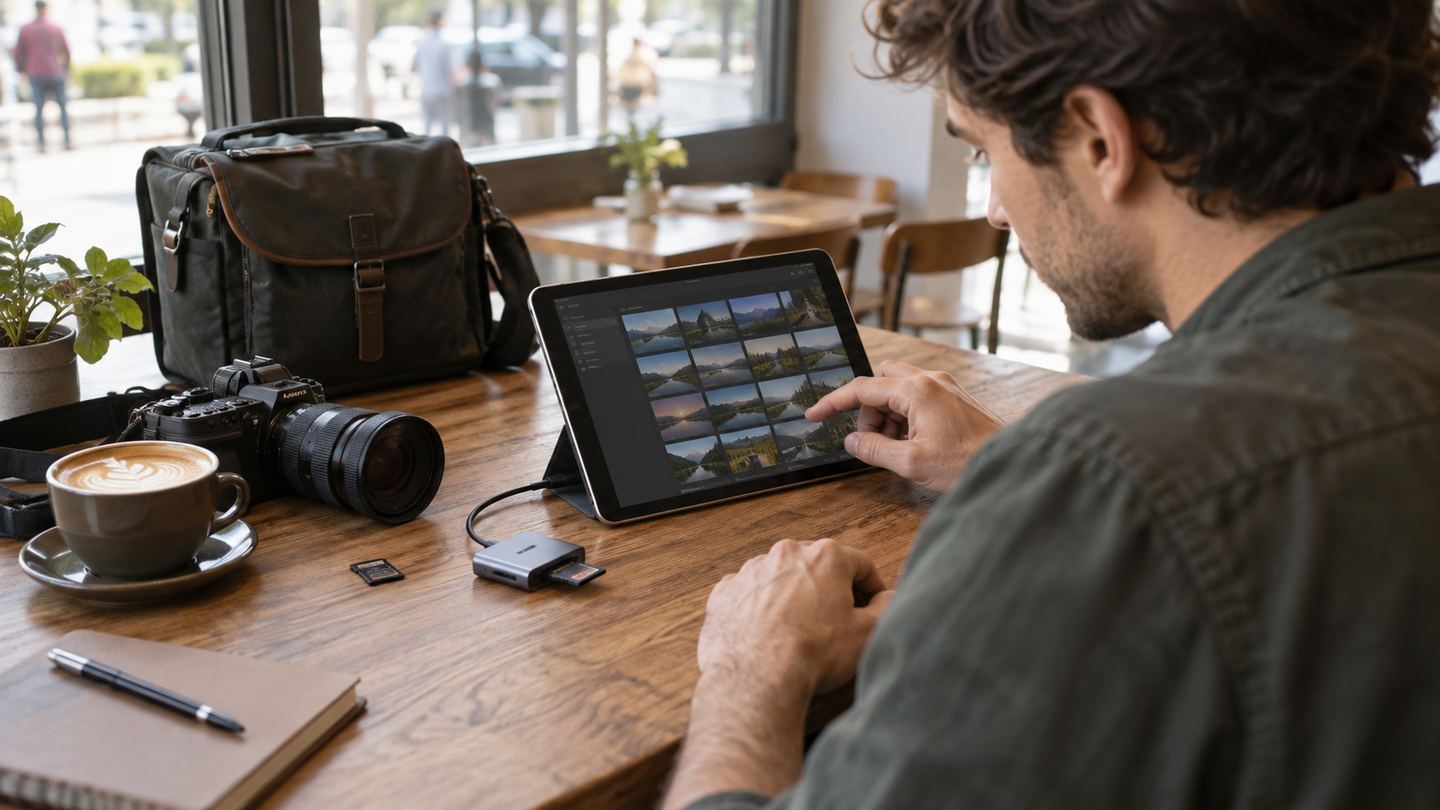
After a weekend shoot, a photographer wants to select images on a tablet before getting home. The camera uses one card format, the tablet another connector, and a reader that works on a laptop might not be recognized by a phone app.
An import setup must survive repeated inserts, camera file sizes, and travel. A compact reader can be excellent for one format; a hub makes sense when the same bag also needs power and an external drive.
Three useful buying paths
These are practical search directions rather than fixed winners. Product versions, sellers, availability, and prices change, so verify the current listing against the checklist below.
Compact USB-C reader for one card format
Minimal kit when one camera and one editing device do the work.
Dual-slot SD and microSD reader
Useful when camera, action camera, and drone cards coexist.
Powered hub with card slot
Combines import, charging, and storage at a permanent workstation.
Amazon availability and prices can change at any time. Match the full model, included accessories, seller, and return terms before ordering.
What matters before you buy
Card format
Confirm the reader physically accepts the precise full-size SD, microSD, or other format your camera uses.
Host support
A compatible connector is not enough; check phone or tablet file-app support, power needs, and manufacturer guidance.
Real speed path
Transfer is limited by card, reader, host port, and destination storage. A headline interface speed is not a guaranteed import time.
Simultaneous slots
Some dual-slot readers share bandwidth or expose one card at a time. Read the operating details if you transfer between cards.
Protection
A tethered cap and firm socket are useful in a bag; a tiny uncovered connector can collect pocket lint.
How to make the choice
Test a full card with your normal import app and folder structure before relying on the reader away from home. Confirm whether raw files, video codecs, and metadata can be viewed or merely copied. Keep a second copy before erasing the camera card.
For a desktop, pay for a convenient port position and sturdy cable more readily than theoretical maximum bandwidth. For travel, a dedicated one-card reader is easier to replace and diagnose than a complicated multi-function hub.
Your five-minute pre-purchase check
- Write down the exact devices, room, and routine the product must support.
- Open the manufacturer documentation for the precise model or regional variant.
- Price required cables, mounts, subscriptions, consumables, or adapters.
- Confirm seller identity, warranty route, delivery contents, and return window.
- Save the listing details you relied on because marketplace pages can change.
Common mistakes to avoid
- Buying a reader for the wrong card family
- Assuming a phone will power every hub
- Deleting the original card before checking the imported files
Buy for the routine, not the headline
Choose the simplest reader that matches your card, device, and import app. Add a multi-slot hub only when those extra connections are part of the real workflow.
Frequently asked questions
Can I import raw photos directly to a phone?
Possibly, but file-app and editing-app support vary. Test the exact camera format and phone software first.
Will a faster reader always speed up copying?
No. The card's own speed, port, and destination storage may be the limit.
How this guide was prepared
Top100 Tech Lab organized this guide around a real purchasing situation, the capabilities commonly documented for this category, compatibility checks, and the costs that often appear after checkout. We do not present manufacturer claims as independent measurements, and we do not invent personal test results. When a listing conflicts with official documentation, use the manufacturer’s exact model information and contact the seller before buying.